
Learning-Based Compress-and-Forward for Relay and Diamond Relay Channels
Overview
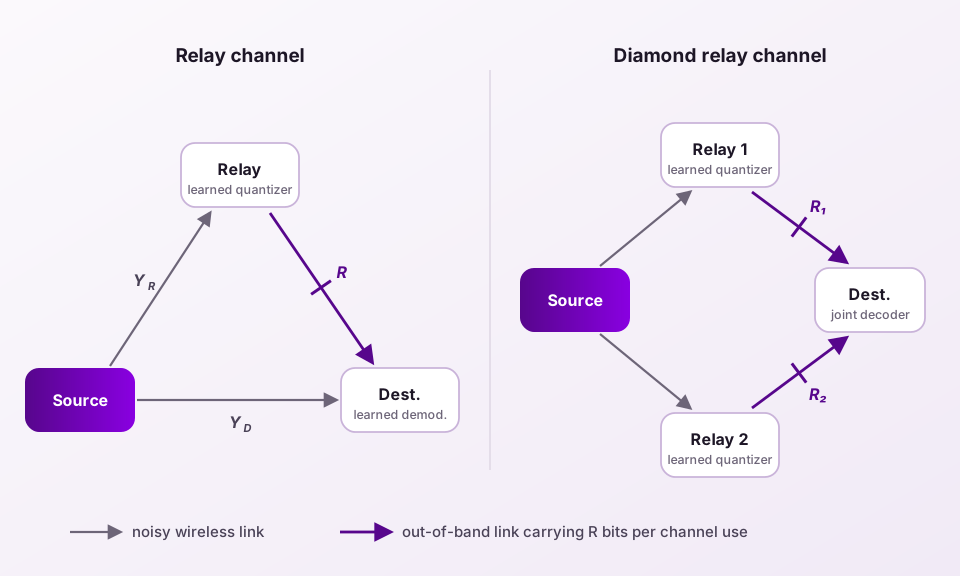
Relays are a basic building block of cooperative communication. In compress-and-forward (CF), the relay sends the destination a quantized version of what it received. The destination already holds a correlated signal, so the relay can compress far more efficiently with distributed (Wyner–Ziv) coding. Optimal CF relies on asymptotic arguments with Gaussian codebooks, however, and practical CF schemes with finite-order modulation are not well developed.
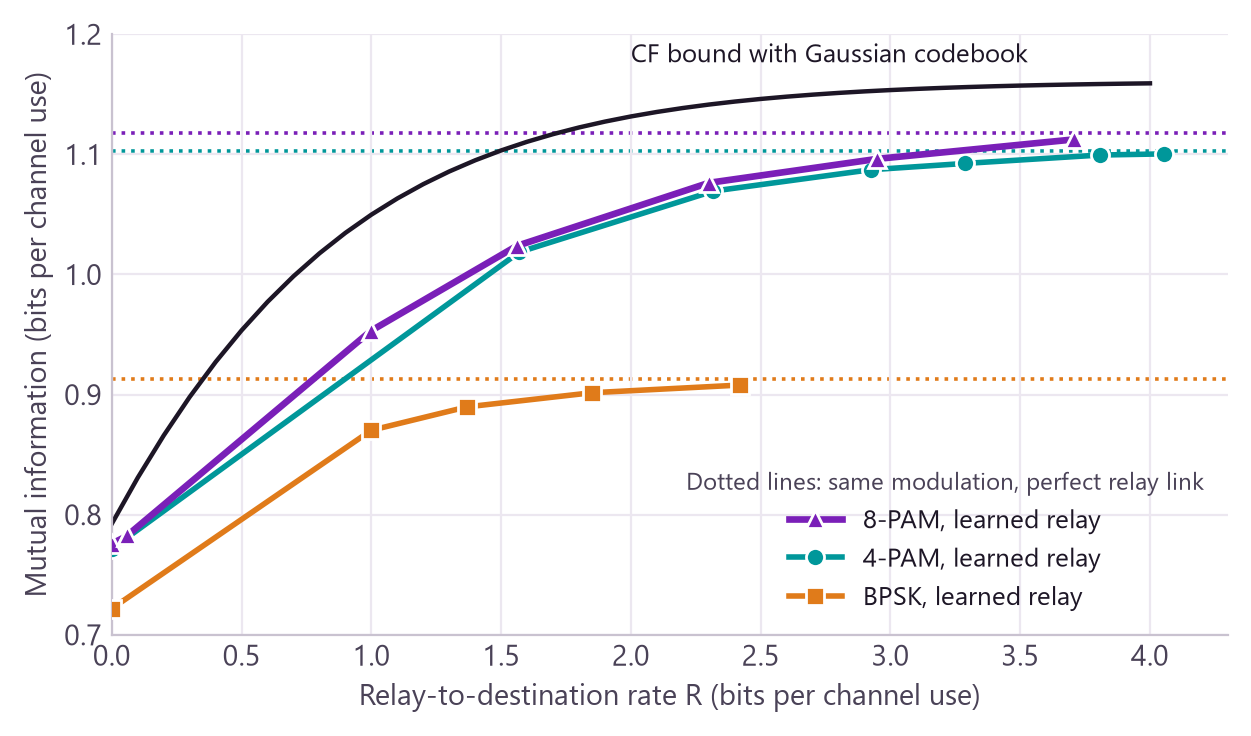
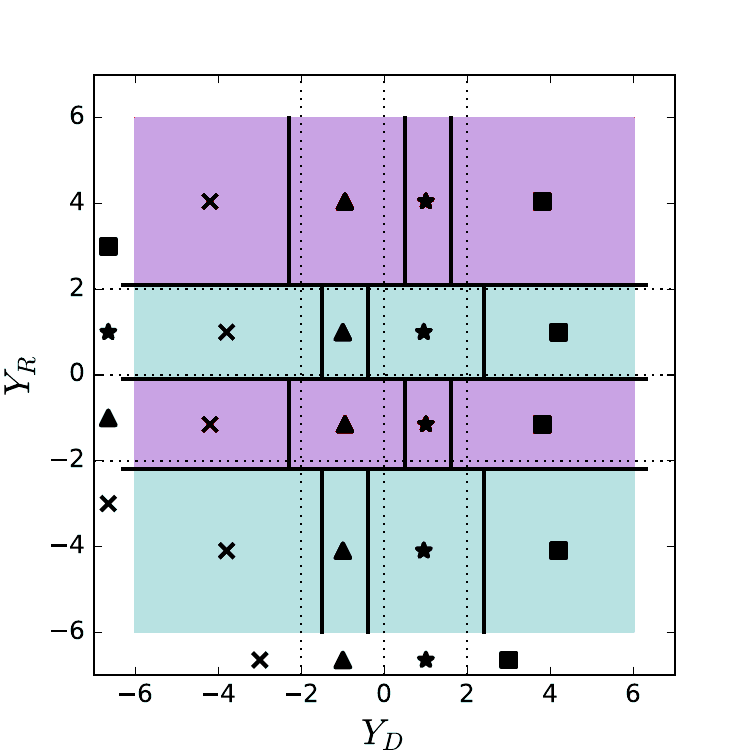
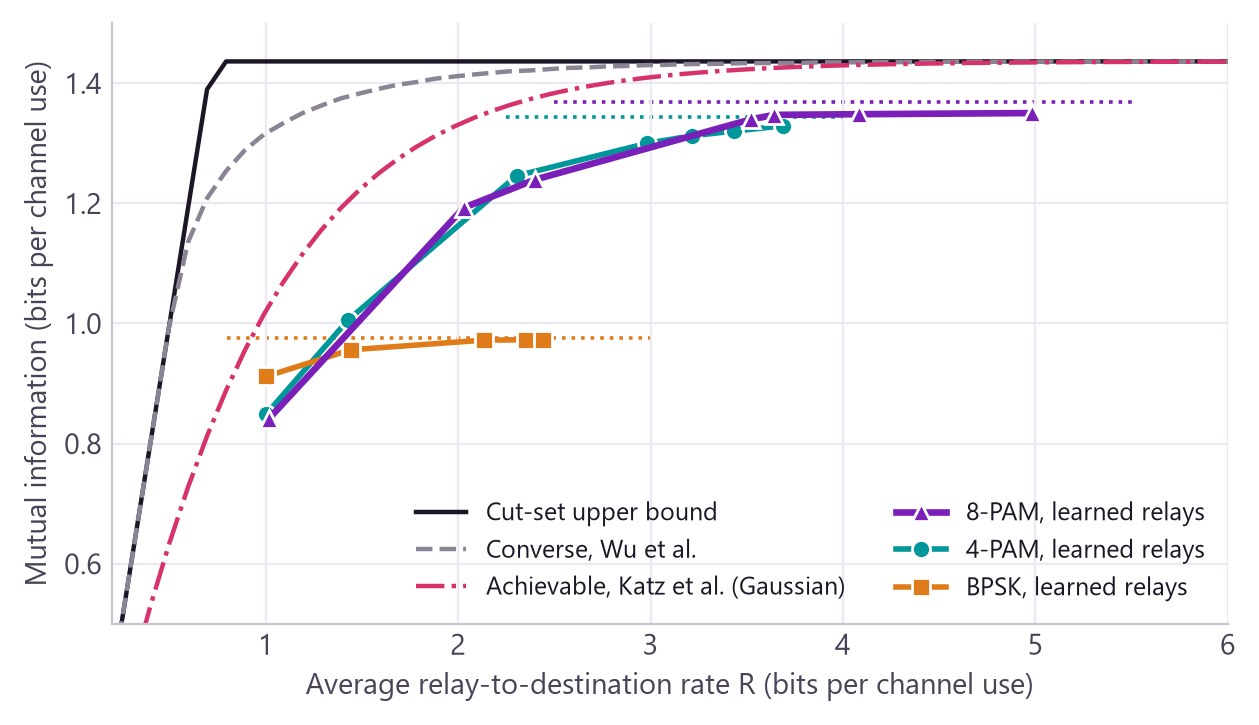
This project builds CF relaying from the learned distributed compressors developed in our group. For the primitive relay channel, with a finite-rate, out-of-band link from the relay to the destination, a learned one-shot Wyner–Ziv quantizer is trained end to end with the demodulator. The learned relay recovers binning and operates close to the rate achievable with a Gaussian codebook. We then extend the approach to the diamond relay channel, where two relays each compress their observation separately, without coordinating. The destination decodes jointly, and the scheme approaches known theoretical bounds while remaining interpretable.
The work was supported in part by the NYU WIRELESS Industrial Affiliates Program and by NSF.
Team
Faculty
Students
Ezgi ÖzyılkanFabrizio CarpiOzan Aygün
Selected publications