
NeuroTap: Chip-Scale High-Resolution Neural Recording with Wireless Communication and Powering
Overview
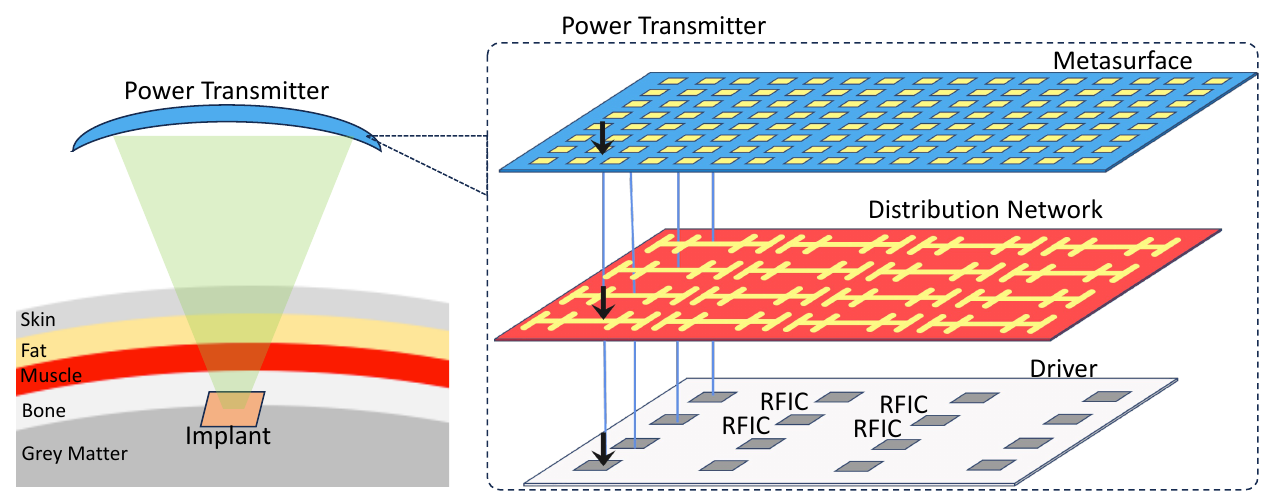
Neural interfaces have transformed our understanding of the brain and are laying the groundwork for next-generation neural prostheses and treatments for neurological disorders. Realizing that vision requires recording from thousands of neurons at once, with single-neuron resolution, from compact wireless implants that can operate safely in the body for years. Today, wireless connectivity, power delivery and the energy efficiency of acquisition circuits all limit how far neural interfaces can scale.
This CAREER project aims to improve power delivery, energy efficiency, wireless data throughput and the number of simultaneous recording channels by an order of magnitude, through wirelessly powered, distributed systems-on-chip. It has three interlocked research thrusts:
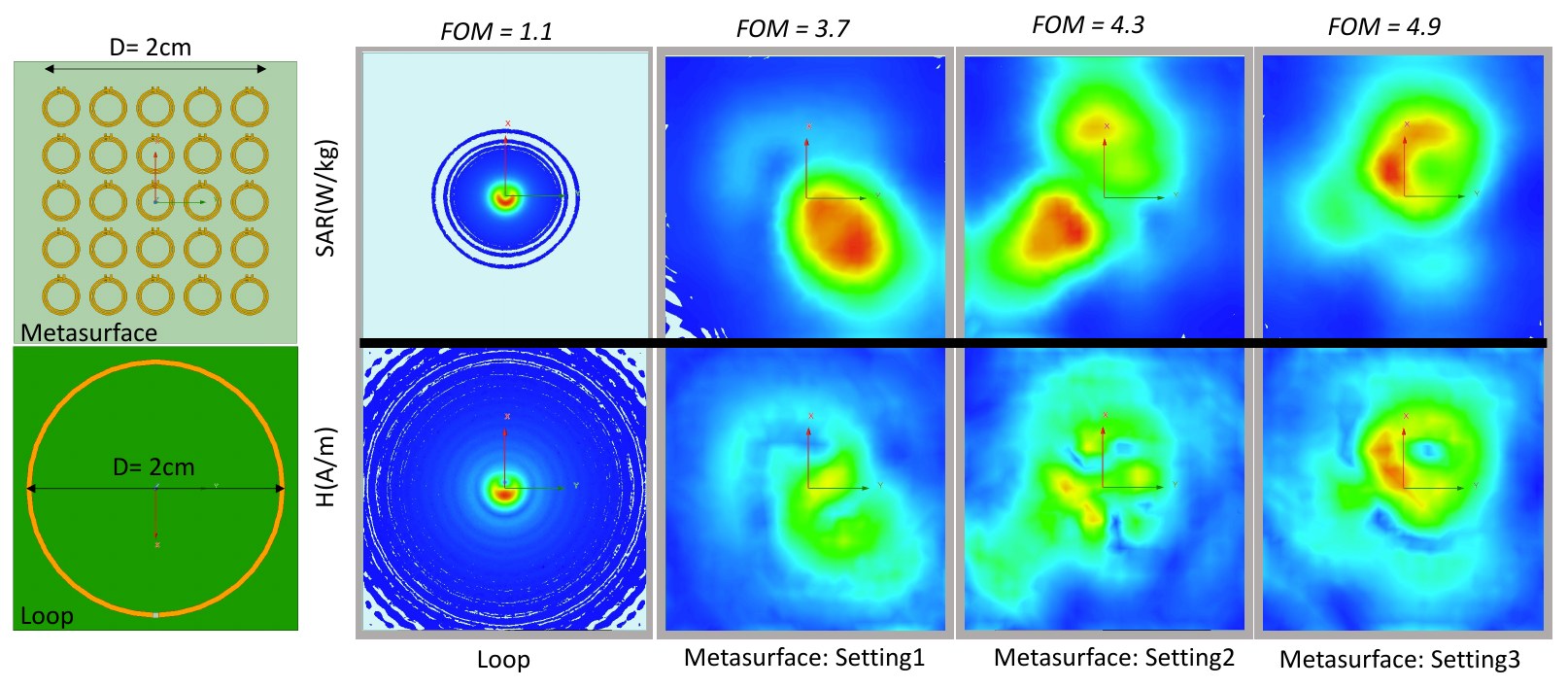
- Wireless power. Programmable near-field electromagnetic fields, shaped by metasurfaces, that focus multiple power beams on miniaturized implants to raise received power without increasing tissue heating.
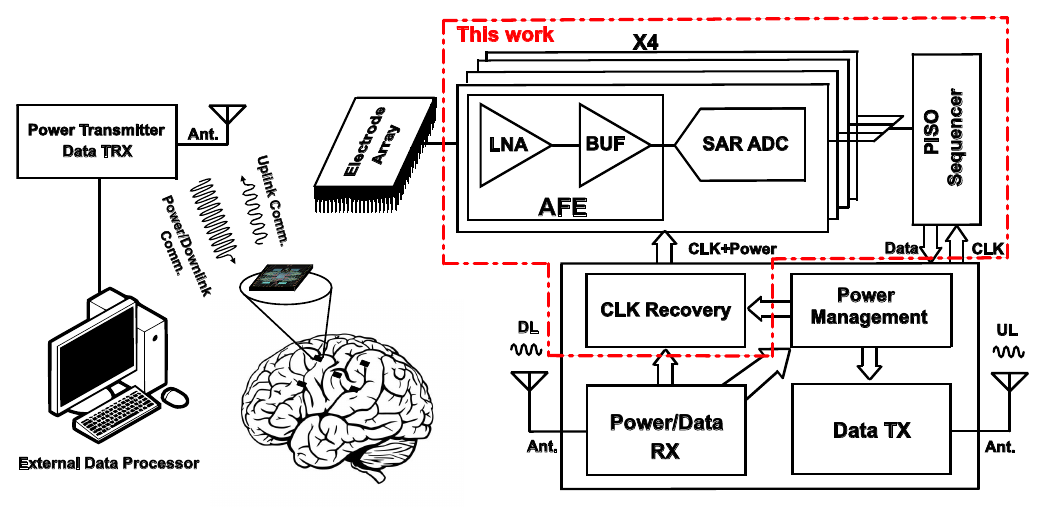
- Wireless communication. Antenna-circuit co-design and high-order modulation to scale data rates with minimal latency under tight power and size limits.
- Neural recording. Large-scale electrode arrays with readout and routing-sharing circuits that cut the number of amplifiers and interconnects needed for high channel counts.
The project also develops new curricula, mentorship programs and hands-on workshops in bioelectronics and integrated systems.
Team
Faculty
Students
Yingrui WeiChuhan Xue
Selected publications