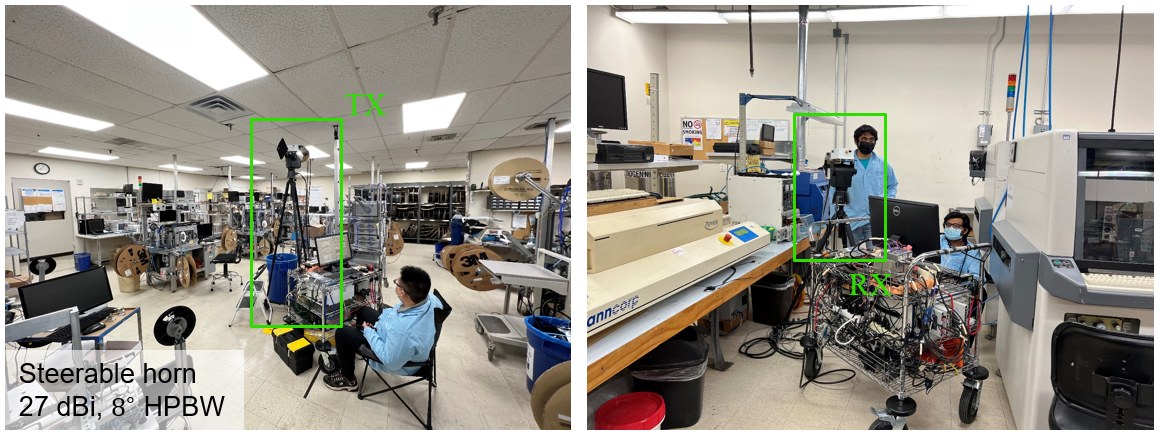
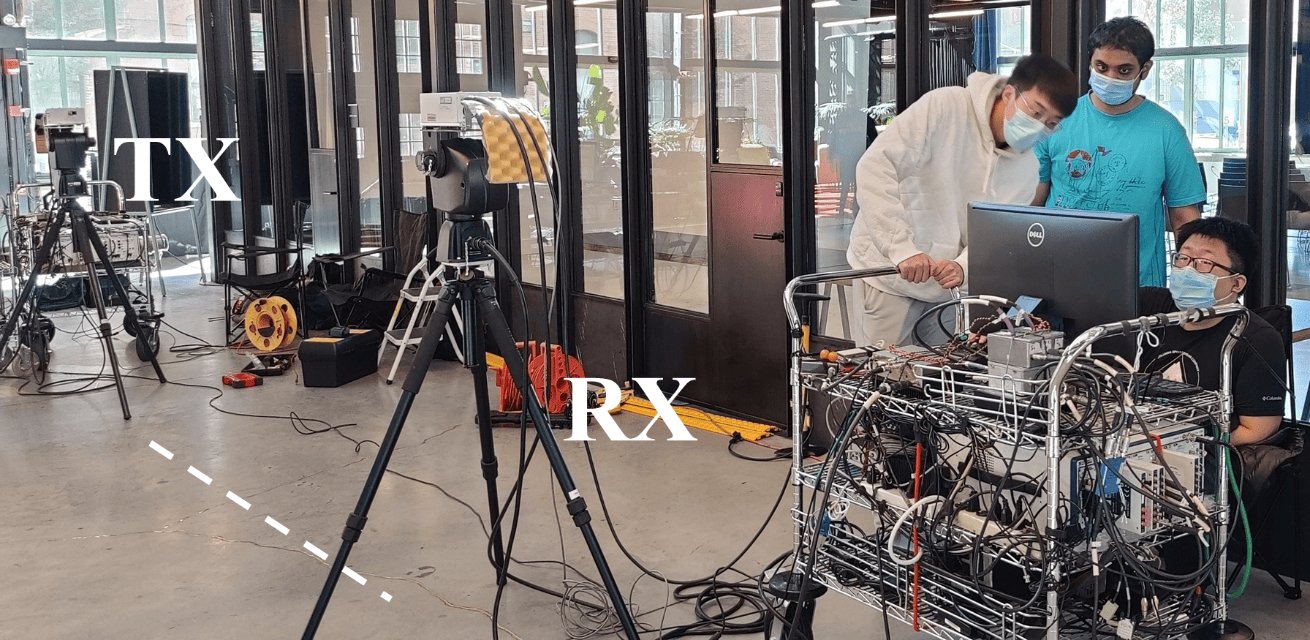
Clock drift in a 142 GHz sounder
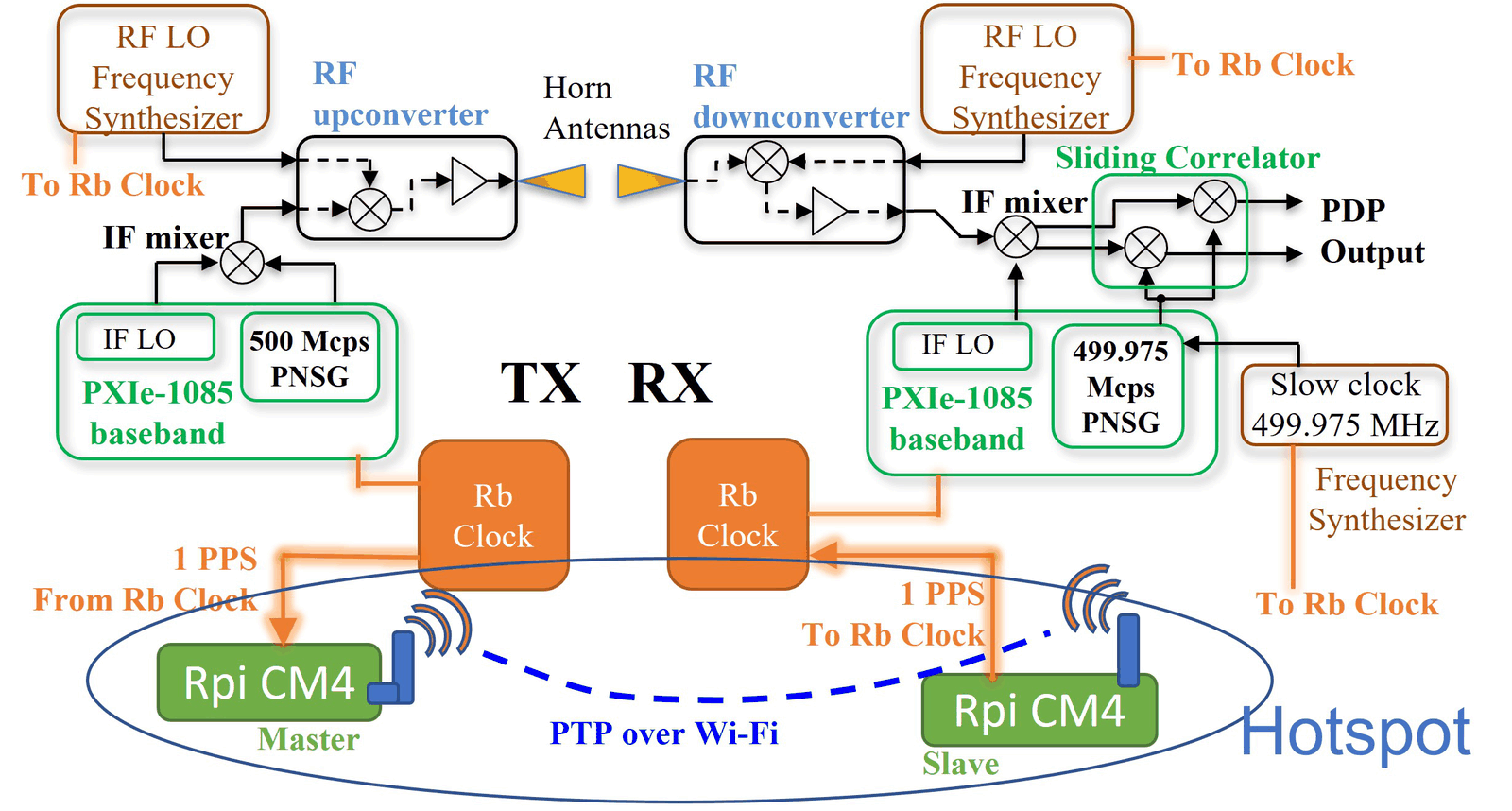
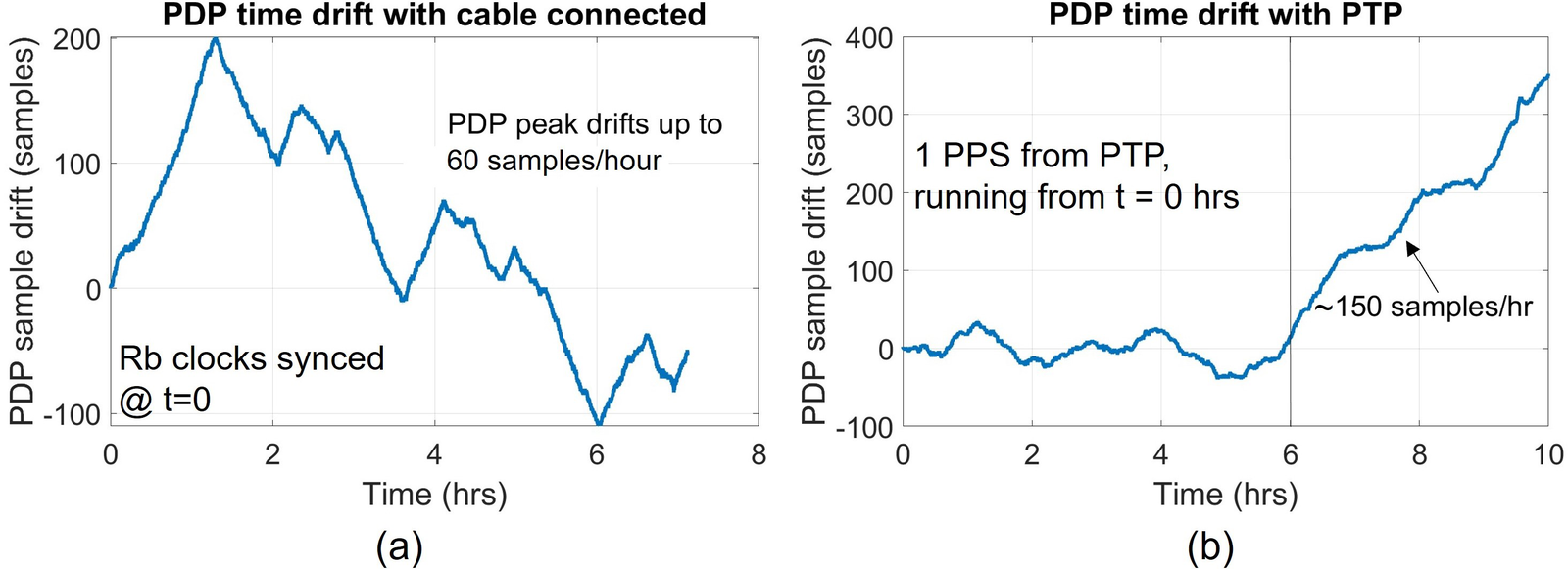
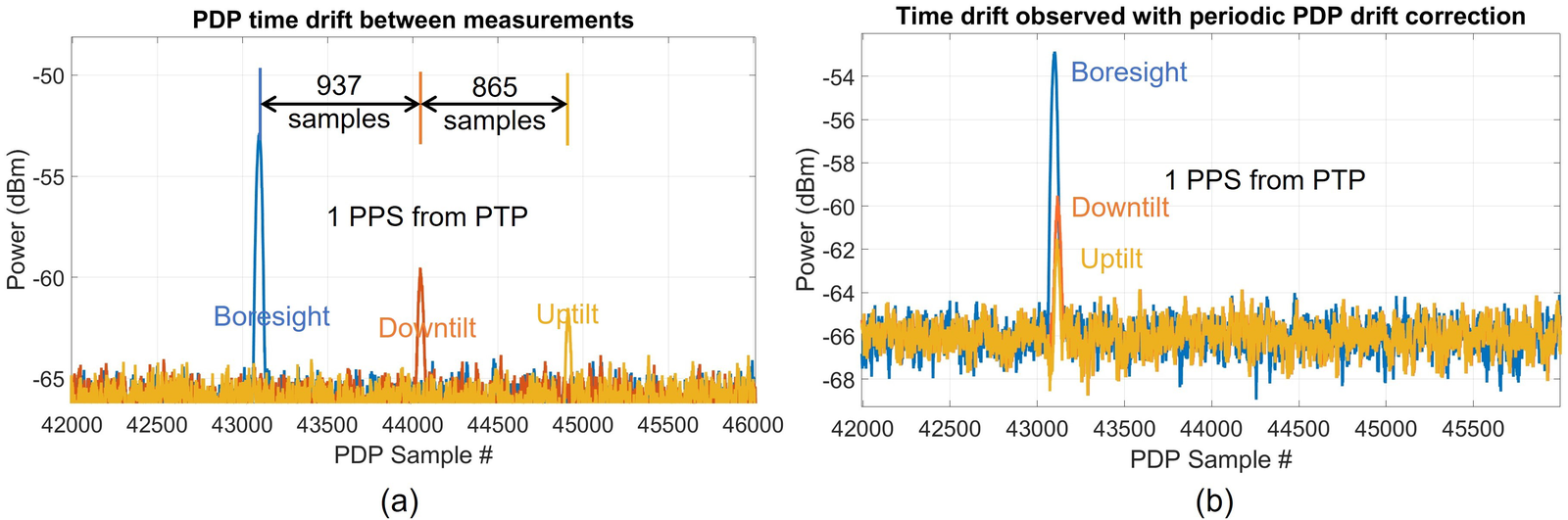
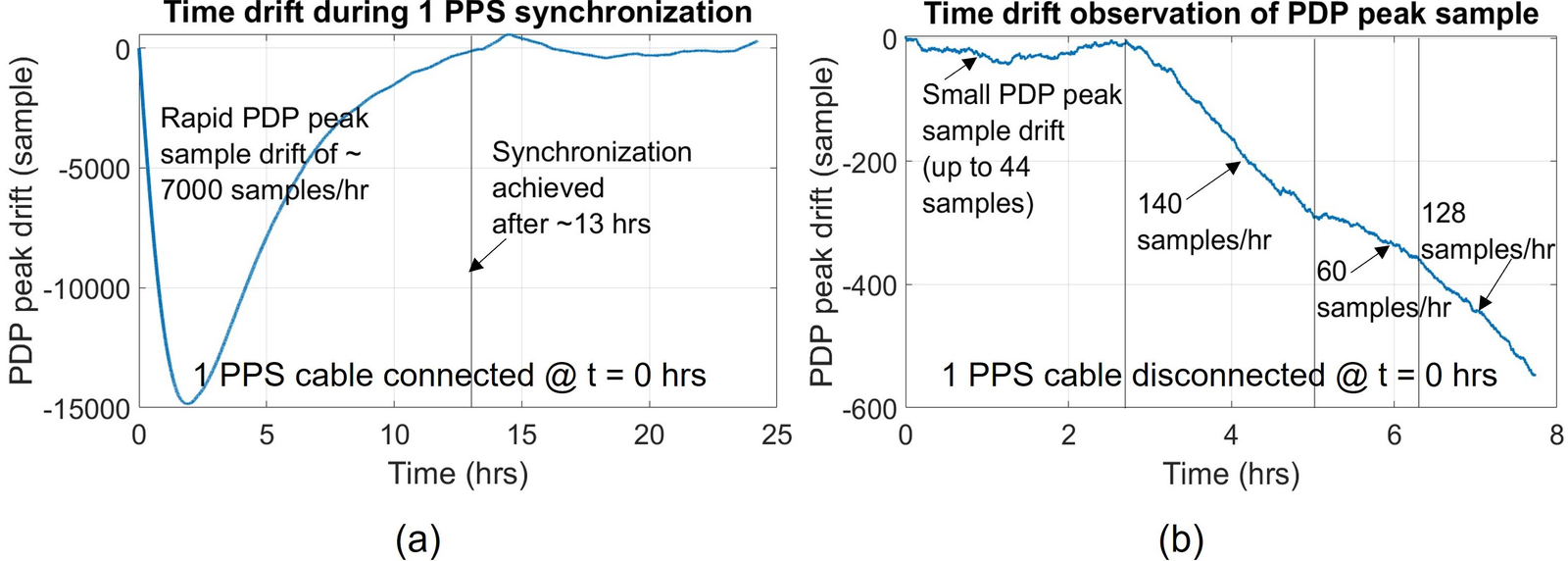
The transmitter and receiver each run from their own rubidium (Rb) atomic clock, and small phase and frequency differences make the two clocks drift apart, up to 350 ns per hour when free-running. A sliding correlator stretches time by a factor of 8000, so this time drift circularly shifts every power delay profile (PDP) and creates false or missed paths when directional measurements are combined into omnidirectional models. Recovering from a fast drift took 10–13 hours of cable training (Shakya, Poddar & Rappaport, IEEE GLOBECOM 2023).
PDP peak drift between untethered Rb clocks: about 7000 samples per hour that took about 13 hours of 1 PPS cable training to recover (left), and 44–140 samples per hour after the cable is removed (right) (Shakya et al., GLOBECOM 2023).